Online Art Gallery Membership Where I Can Print Certs of Authenticity
Is Your Certificate of Actuality
Worth the Newspaper It's Printed On?
Related Topic: Fine art Provenance: What It Is and How to Verify It
Are you an creative person who wants to include COAs with your fine art? Are you a collector who has questions about a COA? I regularly consult on all aspects of COAs. Email me at alanbamberger@me.com or requite me a call at 415.931.7875 to make an appointment if you accept any questions about whether a COA is valid or non, or what types of information a valid COA should include.
***
Q: Should a collector become a certificate of actuality (COA) when he or she buys a work of art? Or should the certificate exist sent separately after they purchase the fine art? Who writes these certificates and what makes them valid? The reason I'm asking is that I bought two limited edition prints from an online art gallery and I expected that the gallery would provide certificates of authenticity with the fine art. In both cases, they shipped the fine art merely no certificates. The gallery said they would mail the certificates to me, but I have yet to receive them. So please help me understand certificates of authenticity.
A: To begin with, you need to know what a Certificate of Actuality or COA is because all kinds of COAs are floating around out there, both real and fake. They accompany all kinds of art and are offered by galleries, individual sellers, artists, websites and at auctions, especially online auctions like eBay and LiveAuctioneers. And you need to see information technology BEFORE you purchase the art, non after-- no affair what reasons a seller gives or what kinds of promises they make. Unless a certificate of authenticity originates from and is signed by either the artist who created the art, the publisher of the art (in the case of limited editions), a confirmed established dealer or agent of the artist (not a casual third political party dealer or reseller), or an acknowledged expert on the creative person, that certificate is likely to exist pretty much meaningless.
A genuine COA must contain specific descriptive details about the art such as what the medium is (painting, sculpture, digital print, etc), the proper noun of the artist or publisher (or both), the art's exact title or subject affair, dimensions, details of the edition size if it is a limited edition (along with the specific number of the detail in question), names of previous owners (when relevant), and if applicable, titles and entries of reference books or other resources that contain either specific or related data about either that work of art or the artist who produced it. Images of the art in question are besides good. The championship and qualifications of the individual or entity who authored and signed the certificate should too be included, likewise every bit their contact information, and both contact information and qualifications MUST exist verifiable.
A formal document of authenticity is not necessarily required to testify a work of art is 18-carat. Whatever valid receipt, bill of sale or proof of purchase either directly from the artist or from a confirmed and established dealer, reseller, publisher, or representative or agent of the creative person will do. An appraisal from a recognized authority or expert on the artist which includes a statement or guarantee of actuality is as well acceptable. Whenever authenticity is at consequence, but conclusive statements of authorship from a RECOGNIZED or QUALIFIED practiced on the art and artist in question are acceptable, not breezy statements, opinions or offhand price estimates from anyone who happens to buy or sell or appraise or otherwise transact in occasional works by the creative person.
You can never be too careful here. Certificates of authenticity can be problematic; some are basically worthless and others even fraudulent. Unfortunately, many people believe that art with a COA is automatically genuine, merely that is absolutely not the example. To brainstorm with, no laws govern who is or is not qualified to write certificates of authenticity except in rare instances. Nor is at that place any standard with respect to what types of statements, information or documentation a COA must include. In other words, anyone can write a COA whether they're qualified to or not. As if that's peachy enough, unscrupulous sellers sometimes forge official looking documents or certificates of authenticity and use them to either sell outright fakes or to misrepresent existing works of fine art as beingness more important or valuable than they actually are. These days, anyone can buy attractive COA templates online and simply fill in the blanks. To make matters even worse, meaningless or artificial COAs have been issued for decades, so don't automatically assume that a COA dated 1955, for example, is 18-carat just because information technology'south old.
Your particular situation does not sound good because the seller says the art has certificates of authenticity, merely has non yet shown or sent them. At this signal, trying to get your money back is probably the wisest grade of action. To echo-- from now on, make sure y'all see all information and documentation a seller claims to take BEFORE buying the art. Proceed in mind that if a piece of work of fine art supposedly comes with a certificate of authenticity, non only should you be able to audit it in its entirety alee of time and read and review and corroborate that it's actually valid, but it should also accompany the fine art when you receive information technology. Never just accept a seller's promises or claims as true without start seeing the show and verifying it. And always make sure you get a money-back guarantee.
Beneath are some additional pointers to keep in mind when you are told a work of art has a certificate of authenticity:
* First and foremost, e'er come across, read, empathise, and confirm all data contained in any certificate of authenticity BEFORE you purchase the art.
* All certificates of actuality must be original documents, hand-signed past the artists or authenticators-- NOT photocopies. Unscrupulous sellers have been known to take legitimate certificates, medico them in various ways, photocopy them, and then use them to "authenticate" works of fine art that they were never intended to authenticate.
* A genuine document of authenticity must fully and accurately describe the piece of work of art which it is authenticating, including but non limited to the art's size, medium (painting, watercolor, limited edition print, etc), date, title, discipline affair, edition size (including the specific number of the work in question), and then on. There should be no doubtfulness that the COA describes one and only one work of fine art-- the one you are considering ownership.
* Original receipts direct from the artists or from recognized galleries who represent or were known for representing the artists tin can likewise be considered every bit proof or authentication that the art is by the artist in question. Letters or correspondences straight from the artists that mention, refer to or describe the art can too be considered as authentications.
* If the fine art is for sale online, asking and review the consummate COA or documentation being offered and not just a portion of it. Have the seller email photographs or scans of the complete documents, not merely portions of them.
* Whatsoever conditional statements institute in a certificate of authenticity such as "in our considered opinion..." or "we believe that..." are alert signs that at all-time, the art is only attributed to the artist (which is non a COA) and at worst, that the art may a forgery. The just valid COA is one hand signed past an established respected skillful on the artist stating conclusively that the art is by the creative person whose signature information technology bears.
* A valid document of authenticity should incorporate verifiable documented proof, references, explanations or evidence of why the art is genuine.
* If y'all take whatever questions about a certificate of authenticity, contact the individual who authored it and go the answers BEFORE you lot purchase the fine art. Contacting the seller for their response is ever recommended equally well.
* If a COA contains no contact information for the signer or the signature is non identifiable, and so you are taking your chances past buying the art.
* When the contact information on a certificate of authenticity is no longer valid or is out-of-date, contact a electric current authority or skilful on the artist. If the certificate has been authored by a known, recognized and respected authority on the artist (living or otherwise), it is very likely adequate proof the fine art is 18-carat no matter how long ago information technology was written.
* A statement that a work of art is 18-carat is Non valid proof of authenticity unless signed by an established and respected say-so on the creative person. That authority'southward qualifications should either be stated on the document or be otherwise accessible, available in references or online, and easy to find and verify.
* A certificate with inadequate contact data for the person or company making the statements, or with only an unidentifiable or illegible signature is non necessarily valid. Illegible signatures or incomplete contact information are not acceptable. The signer, source and origination of a COA must be traceable in lodge to corroborate any statements made about the fine art.
* Certificates for fine art by famous artists who produced large amounts of fine art such equally Warhol, Picasso, Chagall or Miro should include the exact titles of the fine art, names of reference books that list the art, dates the art was produced, names of publishers (for limited editions), edition sizes (for express editions), and exact dimensions of the art. Also good to take are names of previous owners, names of dealers or galleries that accept sold the art in the past, information about auctions where the art was sold, images of the fine art, and any other relevant information that speaks directly to the art'south history and authenticity.
* ALL limited edition prints by Warhol, Picasso, Chagall, Miro, and many other famous or well-known artists are documented in books chosen catalogues raisonne. If a catalogue raisonne exists for an artist, the corresponding catalogue number or entry for the piece of work of art in question MUST be noted on the certificate of authenticity.
* Someday a document of authenticity does not satisfy all of the above requirements, consider yourself at risk if you purchase the art.
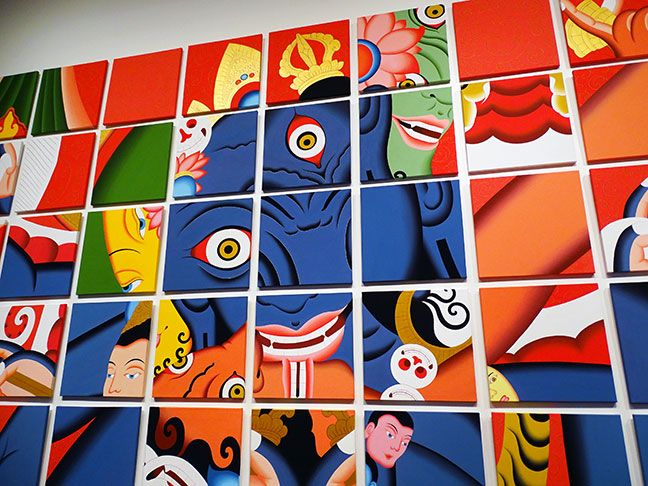
(art by Tsherin Sherpa)
Source: https://www.artbusiness.com/certaut.html
0 Response to "Online Art Gallery Membership Where I Can Print Certs of Authenticity"
Post a Comment